2025: The year of building

2025 was a proper roller coaster. It started quite depressingly with Normally going insolvent and ended on a super high – I designed, built and shipped more than I thought was remotely possible – agents, children's finance, evidence platform, AI in drug discovery, and government trust work.
The thread through all of it: A prototype is worth a thousand slides and AI is only valuable when it’s usable, trustworthy, and testable.
TLDR: What have I been up to?
3 AI-native products shipped or brought to alpha/beta
Thoroughly tested my repeatable 7-week AI Product Sprint methodology in the wild
A growing obsession with control surfaces: provenance, permissions, observability, and human-in-the-loop
Normally closing
Normally closed and the team I worked with for the last 7 years were made redundant. This part was grim – dealing with government redundancy applications processes is nobody’s idea of fun.
I lost a job, but gained an amazing set of friends.
What I learned: when the ground moves under you, relationships and reputation matter more than titles.
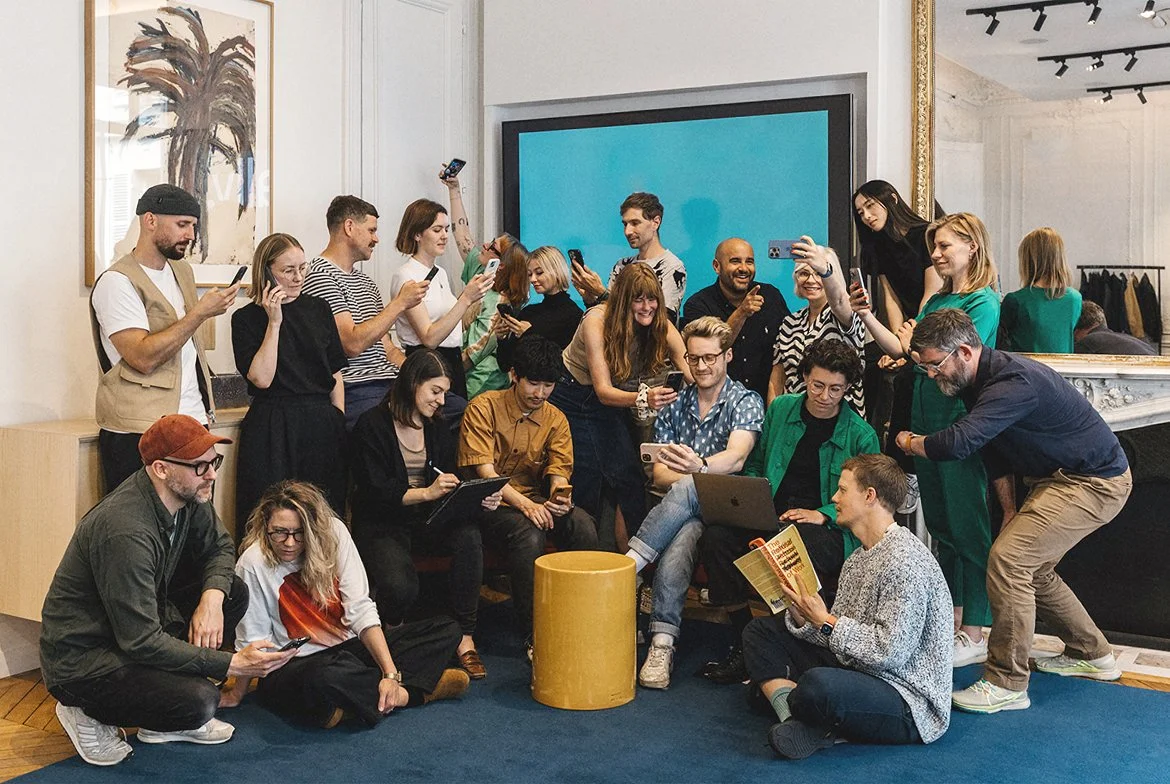
Normally, 2024
April - November
DevRev – Computer + Agent Studio
At DevRev, I led design direction for part of the product design team building two AI-native products – Computer and Agent Studio. DevRev is an enterprise startup focused on unifying data across organisational silos. Computer is an AI teammate for enterprises. Agent Studio is a platform to build, deploy, and manage agents that take action.
Over ~6 months we went from zero to beta. We defined product strategy, interaction models, and visual design – working closely with engineering to deliver.
Agent Studio
With Agent Studio we tackled building production-ready agents conversationally instead of fighting with complex flow-diagram builders:
no-code agent creation via text and conversation
agent architecture of skills, tools, and reusable building blocks
observability and monitoring so teams can improve agents over time
testing and human-in-the-loop settings for fine-grained control
What I learned: in enterprise, governance isn’t friction – it’s what makes agents shippable.
Computer
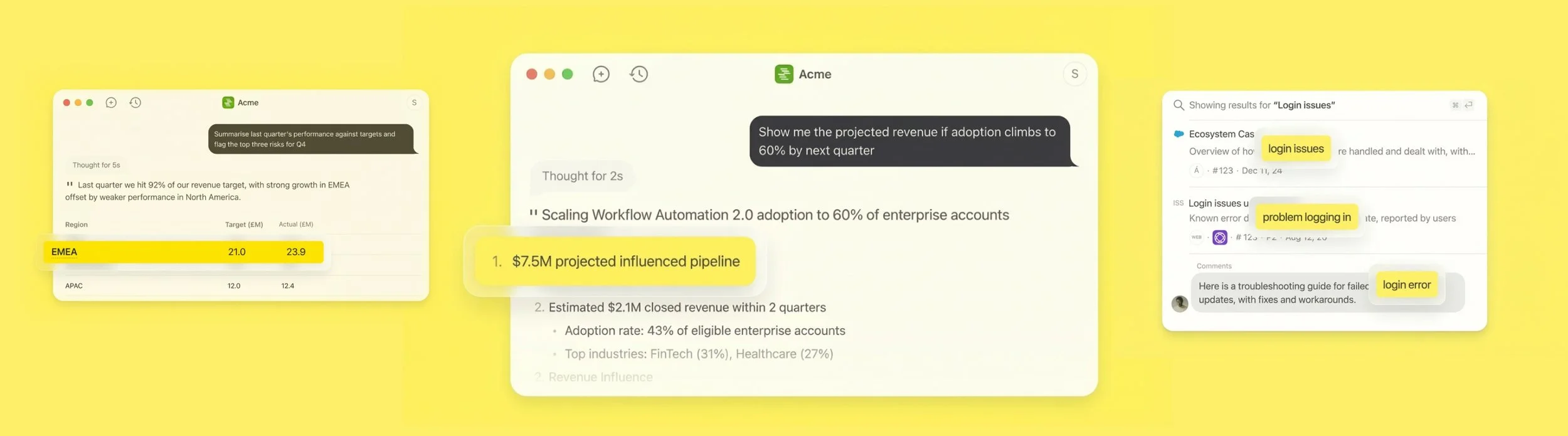
With Computer we explored and solved several conversational-first UI & UX patterns:
blending conversation with structured, generated UI where needed
providing a view into the assistant’s reasoning
navigating past conversations and context
combining complex search and analytical queries with conversation into a coherent workflow
What I learned: chat is an amazing input – GenUI and transparency are what make it usable for real work.
November, December
Enhanced evidence platform for Centre for Homelessness Impact
To close out the year, I led a 8-week AI Product Sprint with the Centre for Homelessness Impact. We designed and built the alpha of an AI research platform to help decision makers find the right evidence for the right problem – inside long, academic PDFs
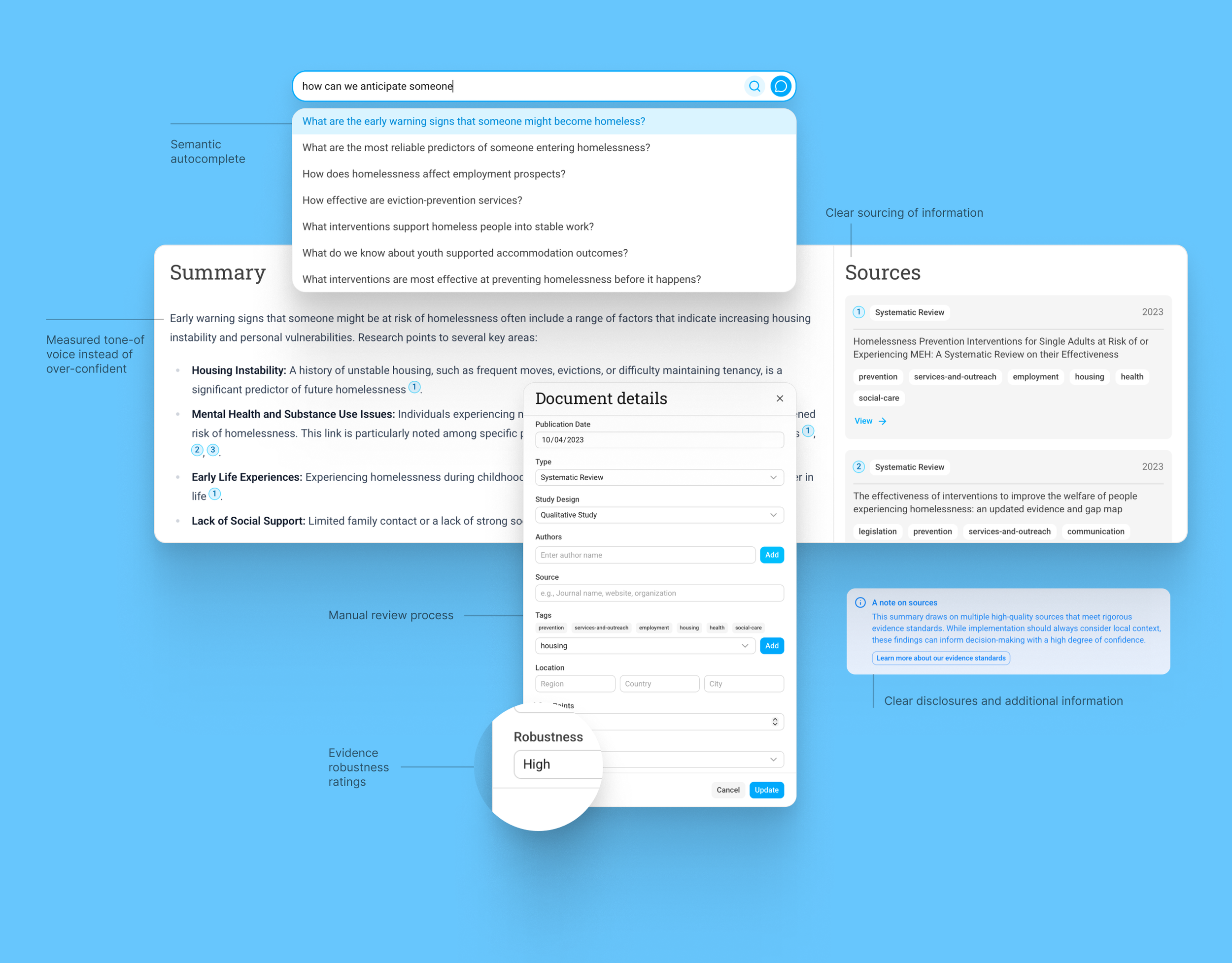
We explored, prototyped, and tested:
accurate metadata extraction from dense evidence papers
fast, relevant retrieval that stays grounded in sources
truthful answer experiences that reduce hallucinations and overconfident tone
hard guardrails that prevent imagined citations and make provenance obvious
Using the AI product sprint methodology, we validated core assumptions quickly. The platform indexed 8M+ characters across ~140 documents and reduced evidence retrieval from days/weeks to sub-3-second responses (while keeping users anchored to sources).
What I learned: a prototype is worth a thousand slides. Because useful, trustworthy AI is a combination of design, technology and governance you have to prototype, test and iterate the real thing – an actual product, not a slide-deck.
Deep Mirror – AI in drug discovery
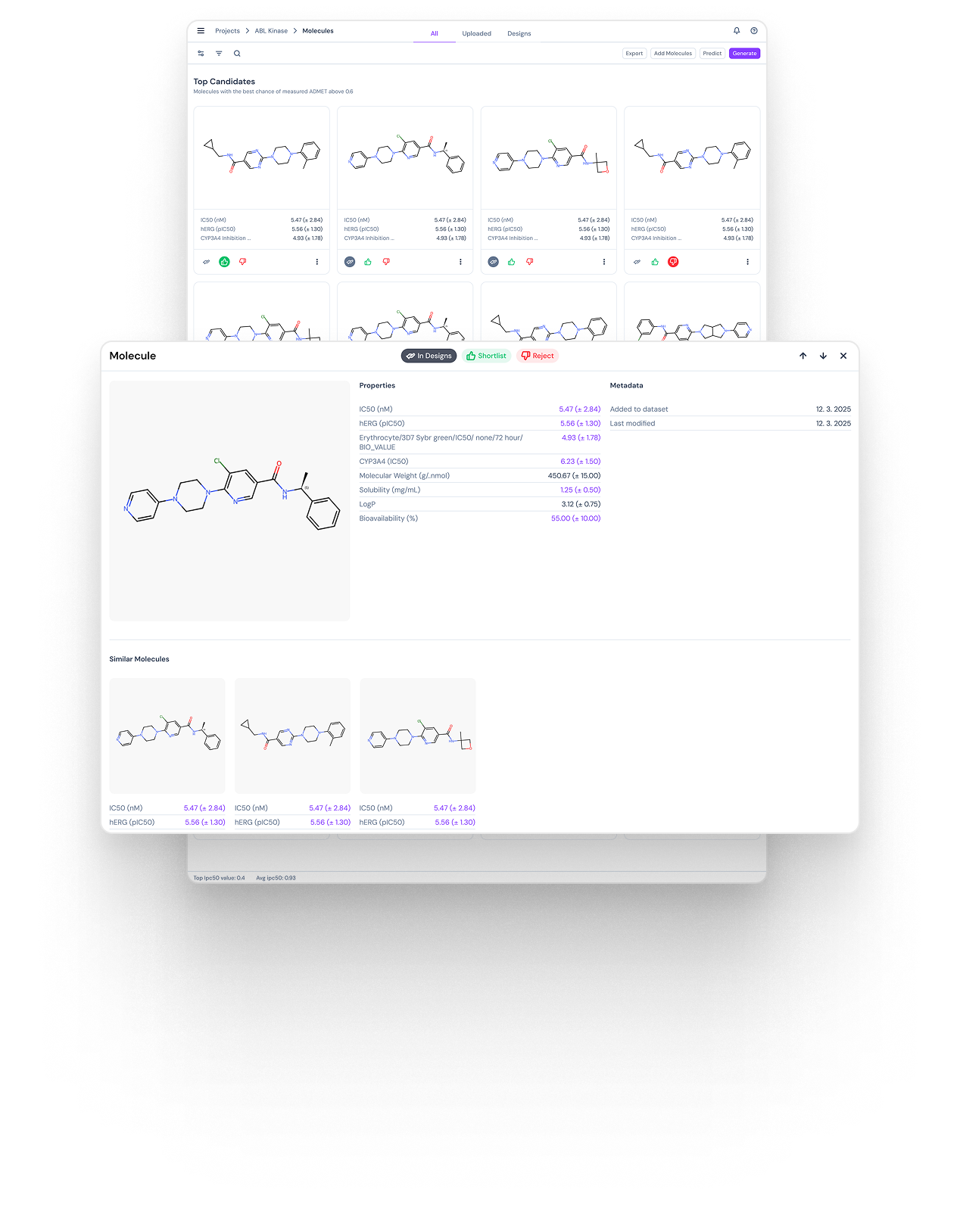
I defined DeepMirror's UX design strategy to support their AI product scale in depth and breadth. In simplified terms: DeepMirror simulate how (drug) molecules might behave against (disease) targets and how they might affect your human body. They can predict the various biometrics, bonds, and generate new molecules that might be more effective. All powered by AI.
The UX challenge wasn't "make it look impressive" it was:
designing an AI collaborator that supports scientists instead of attempting to replace them
maximising screen real-estate for visual reasoning (molecules are visual objects)
clearly separating what’s measured, simulated, and AI-generated
What I learned: in scientific and high-stakes domains, provenance is a key interface element.
Sencillo
I got involved in a finance startup Sencillo as a product lead. Sencillo helps parents plan and pay for their children's education. My long-time friend Adam Amos has just raised a seed round and is gearing up for a launch in early 2026. We worked on defining the product strategy, UX of the product and the MVP.
One of the key challenges for us was to blend:
the emotional drive parents have to provide the best for their kids
the rational discipline of financial planning
What I learned: the best fintech products harness emotion, but protect users from acting on it impulsively.

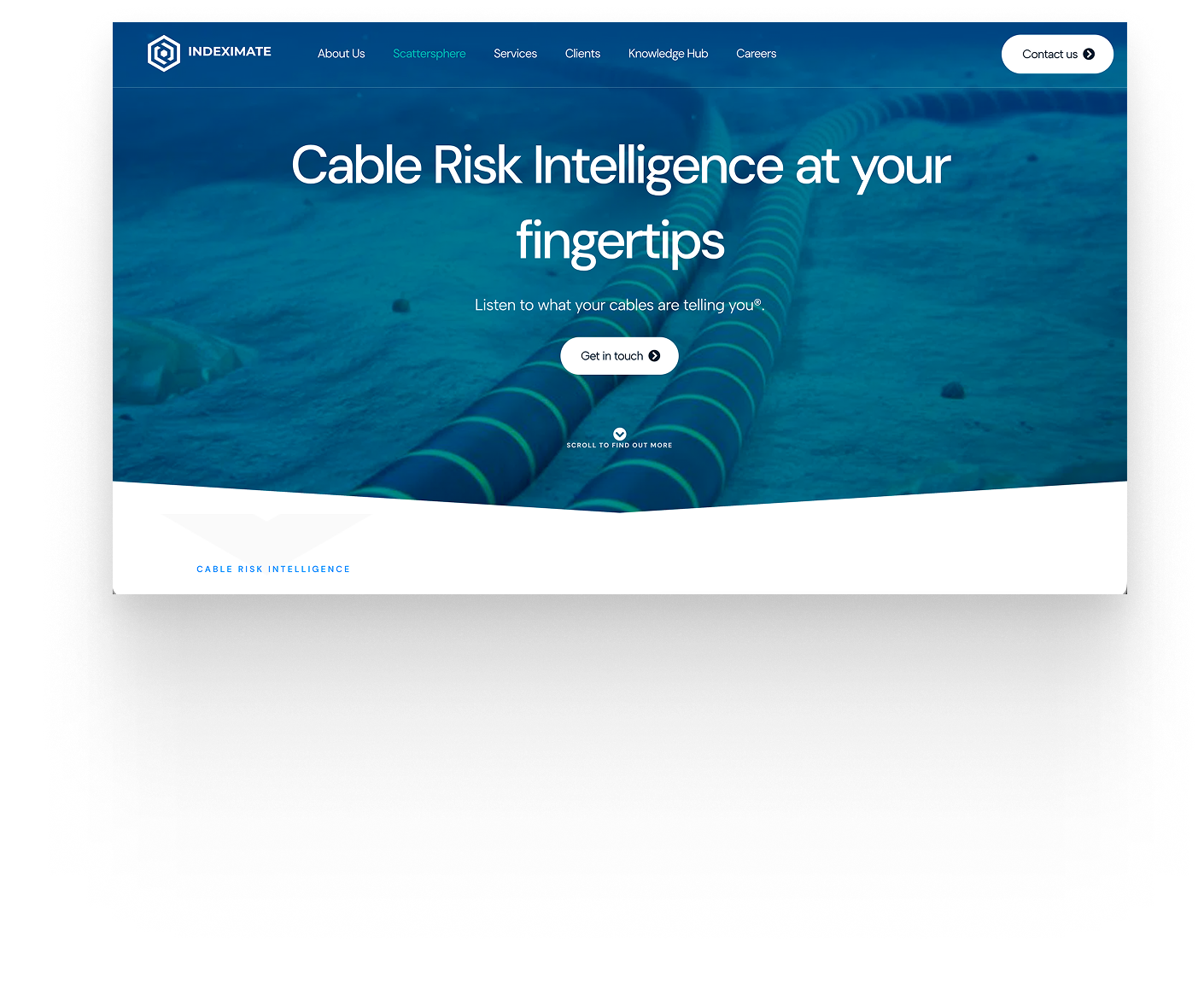
Indeximate – Preventing subsea power cable failure
Working with the brilliant team at AndJump agency, I helped design the MVP for Indeximate – using AI and sensors to predict failures in subsea power cables before they happen.
Initially, I assumed we'd need a classic dashboard with maps embedded in frames or modals. But prototyping revealed something better: map-first navigation. Everything became an interactive map, with detailed information surfacing in contextual modals. For infrastructure monitoring, geography isn't just context – it's the primary interface.
What I learned: don't assume traditional dashboard patterns work for every domain – sometimes the "secondary" interface element should become primary.
Teaching prototyping module for Flipside
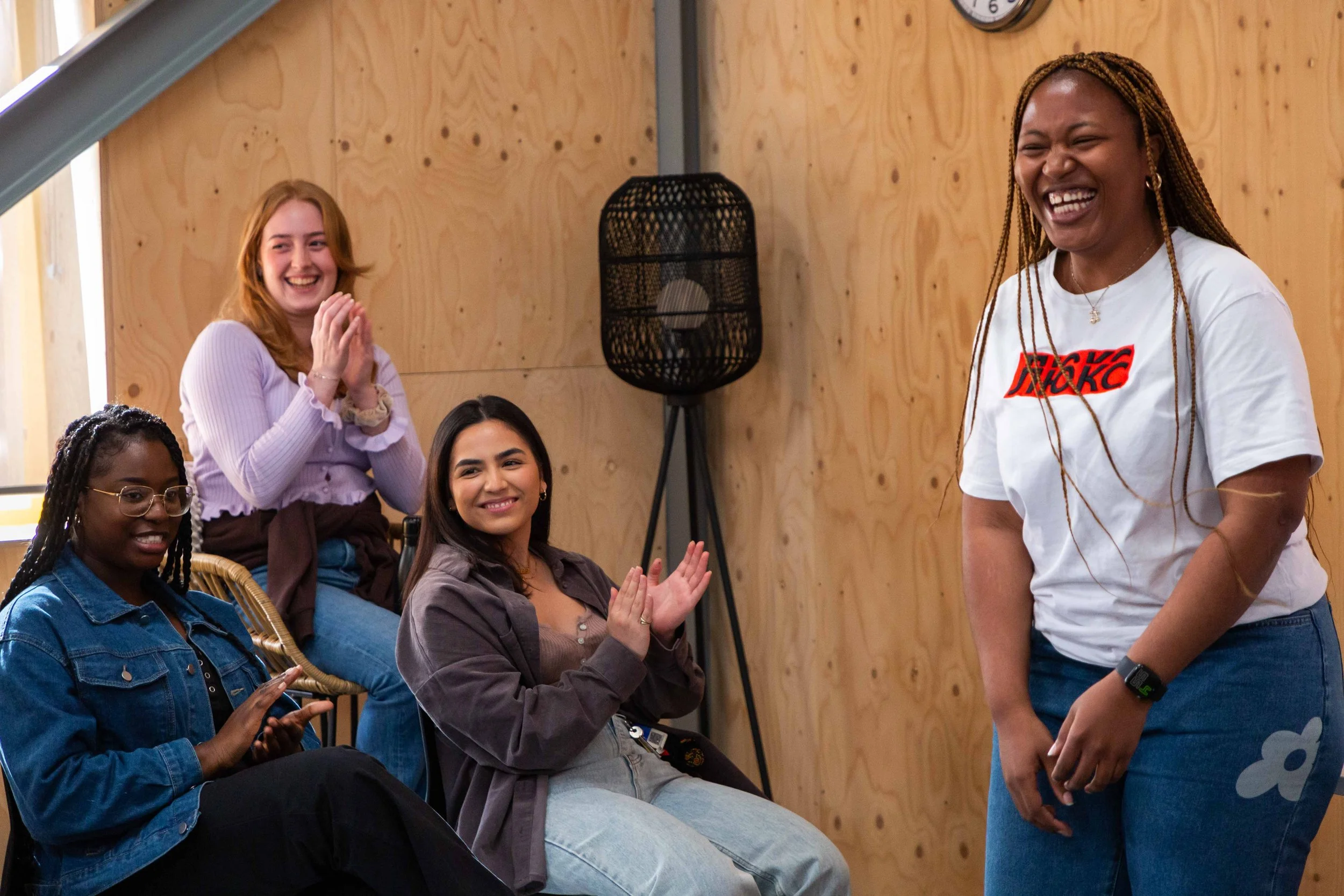
I taught the prototyping module for Flipside – a 3-month digital design programme that helps young people (19-30) break into careers in digital product design. The programme is run by A New Direction and delivered by leading agencies including ustwo, Made by Many, BYND, and Designit…and me.
My module focused on rapid prototyping techniques – teaching participants how to quickly validate ideas, test assumptions, and communicate concepts through interactive prototypes rather than static designs. We covered everything from one-pagers to click-thrugs and fully interactive prototypes, with an emphasis on testing with real users early and often.
Outcome IO – TeamOS
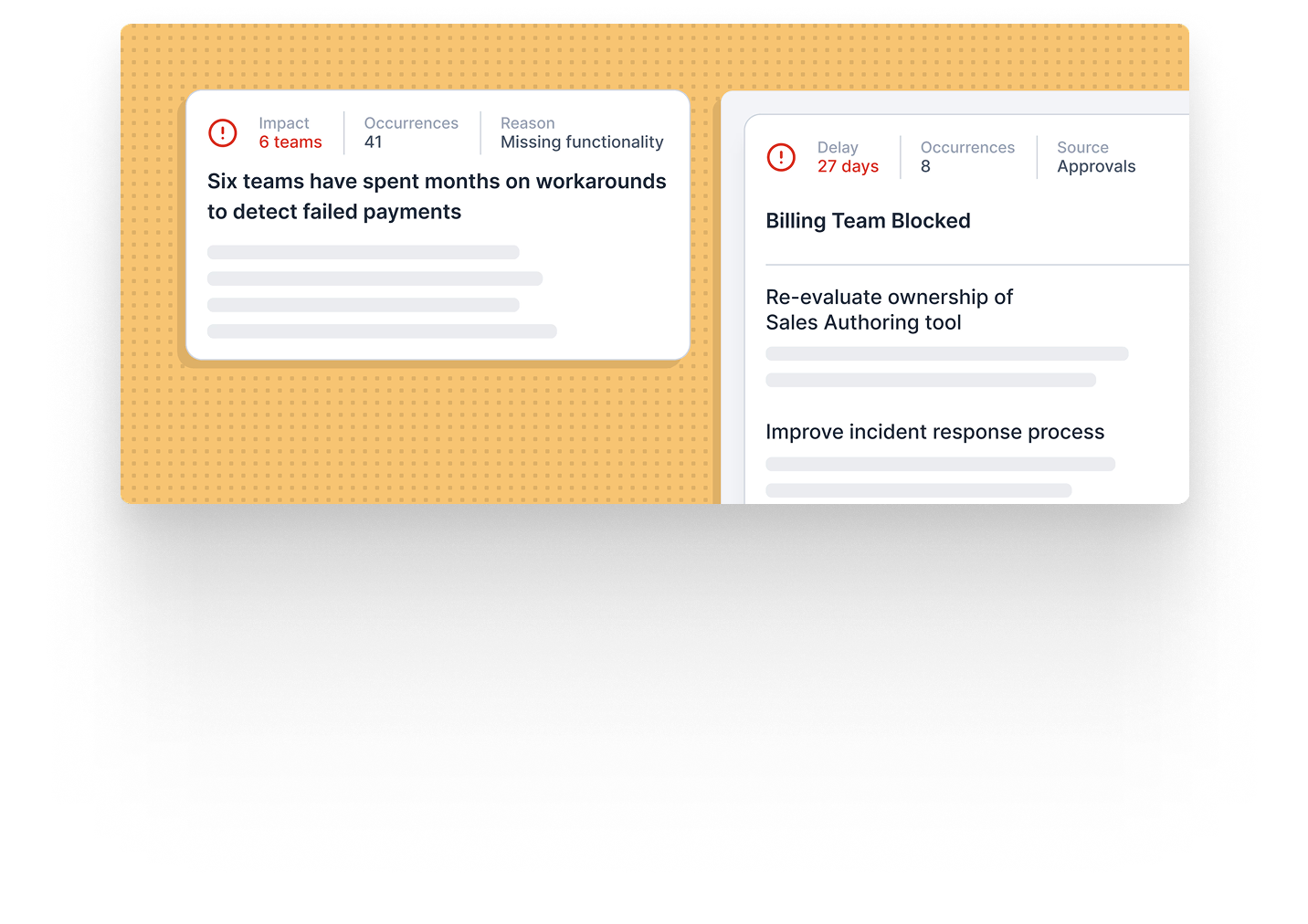
This was a super short and time-sensitive project helping Outcome IO build their pitch deck. TLDR: They've got the funding and are now building an "operating system for how your company works to make ownership explicit, collaboration easy, and progress measurable". They basically help you find bottlenecks in your organisation and fix them.
Although it was brief the problem space is really fascinating. How do you make work visible? How do you detect bottlenecks – and what signals do you need? How do you help people collaborate better? Lots of interesting UX challenges.
What I learned: efficient coordination, collaboration and communication are some of the hardest product problems – and the most valuable ones when you solve them well.
Connected cabin
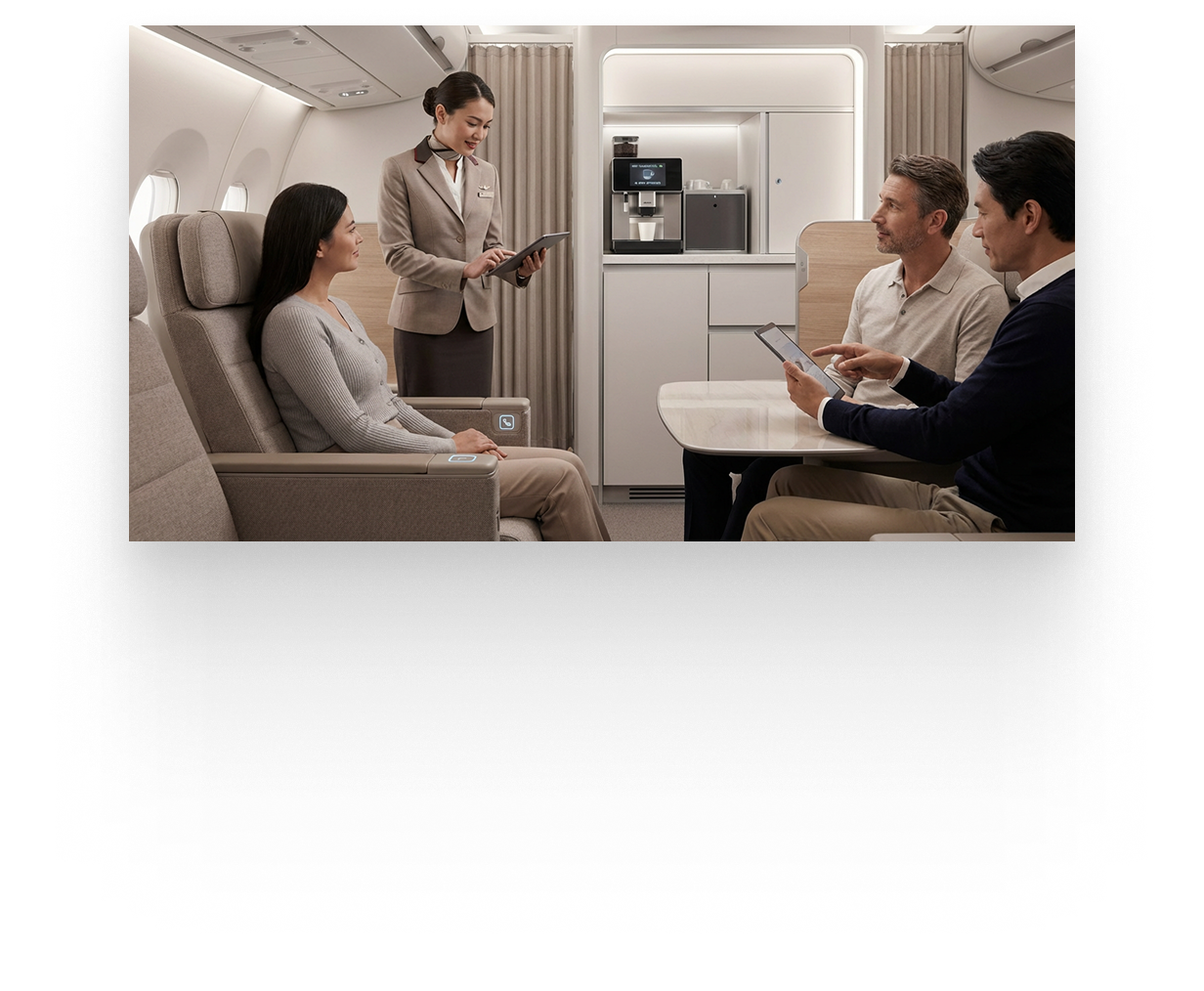
I was brought in by Tangerine to deliver a strategic vision of what a truly connected future aircraft cabin could look like for one of the world’s leading airline manufacturers.
One tidbit that stuck with me: privacy isn’t only about people, but can be about things as-well. If a camera observes a piece of equipment inside an aircraft, it may also capture other manufacturers’ equipment's behaviour. Before you do any AI processing, you may need to remove or mask what you’re not allowed to “see” – effectively protecting the privacy of systems and partners, not just individuals.
What I learned: “privacy by design” applies to the physical world too – and it gets complicated fast.
Projects by IF
I’ve been consulting with Projects by IF on designing for trust in the context of future AI-powered government services. I can’t share details, but we’ve been exploring a set of questions that show up in every serious AI service:
trust, safety, and privacy patterns
control and oversight capabilities
technological limits and fall-back modes
the governance layer that sits above the UI
What I learned: “trust” isn’t a screen – it’s a system.
Looking forward
As I'm reflecting on the year and taking a bit of holidays in snowy Slovenia, I am excited about 2026.
The plan: do more of what works: prototype-led AI product design & development, with guardrails from day one.
If you're interested in learning more about my 8-week AI Product Sprint or just want to geek out about RAG, agents, human-in-the-loop or how design is changing because of AI – let's talk.