
Tallis Habits
A learning habits reflection app co-designed with children
A playful iPad app that helped primary school children build positive learning habits – designed with them, not just for them.
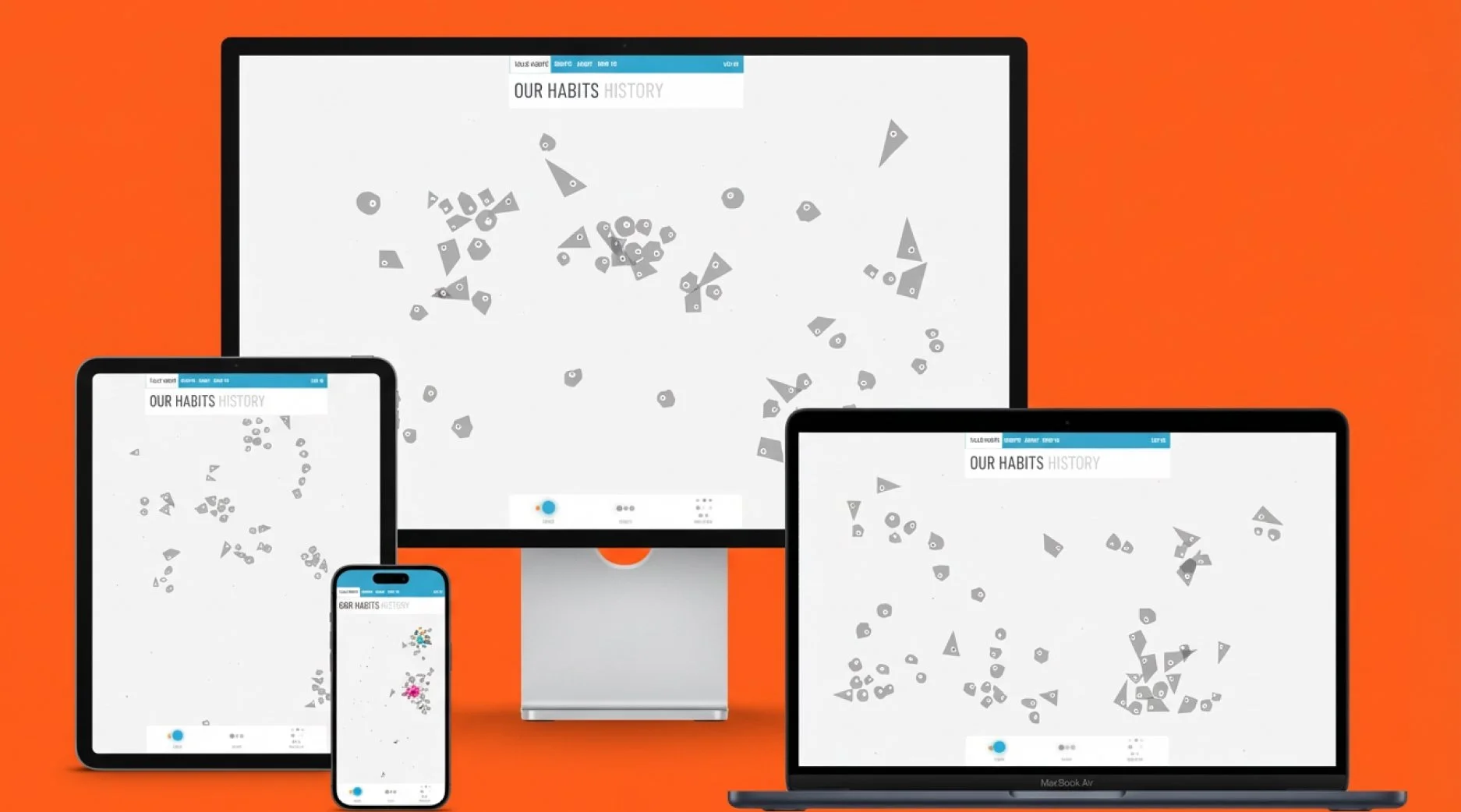

At a glance
Client: Thomas Tallis School
Format: Design + build (18 weeks)
My role: product designer + creative technologist (research, co-design, interaction design, build)
Team: me + school stakeholders (teachers + 9 year-old pupils as co-designers)
What shipped
Tallis Habits App – a school-wide iPad app used over multiple years
The problem
Encouraging kids to become better learners by practising positive learning habits.

Research conducted by Thomas Tallis School (in partnership with a university in Winchester) suggested children can strengthen learning across subjects by practising habits like being inquisitive, persistent, imaginative, disciplined, and collaborative.
The school had introduced a sticker system where teachers awarded stickers when they spotted kids practising those habits. But they wanted to go further: to get kids to reflect on their own learning, and to build those habits into their daily routines.
The goal wasn’t “track habits” – it was to help children want to practise them and reflectively build them into their learning mindset.
The key insight – kids aren’t “users”, they’re co-designers
Children have a radar for bullshit, and unlike some corporate workshop, their feedback is clear and straight to the point. The only way to make this stick was to build it with them – co-design elements together, test early, let them shape the characters, and design for fun as much as utility.
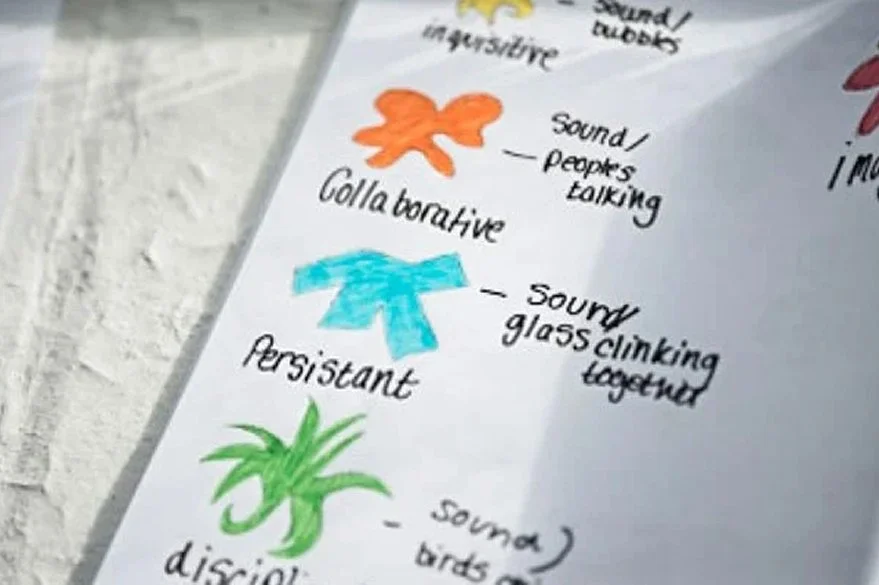
Making a small group of kids the "ambassadors" of the product meant that when it came time to roll it out to the whole school, they were excited to share it with their friends – and the teachers had allies in getting buy-in from pupils.
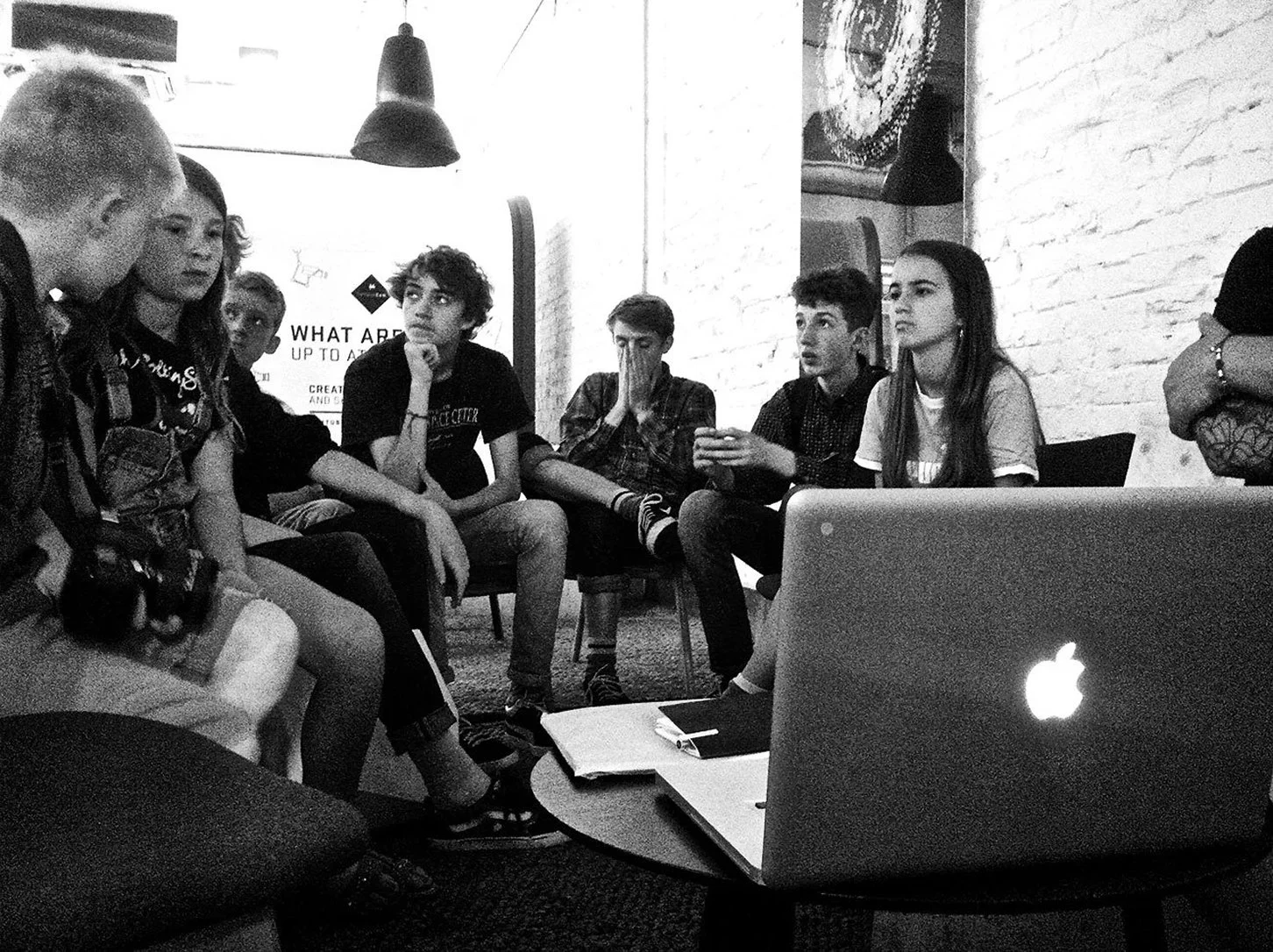

What we designed and built
We ran a set of co-design sessions with the children to co-create together and understand what progress should feel/move/sound/look like, not just what it should measure. The result was a playful iPad web app that turned habit reflection into something kids wanted to do.
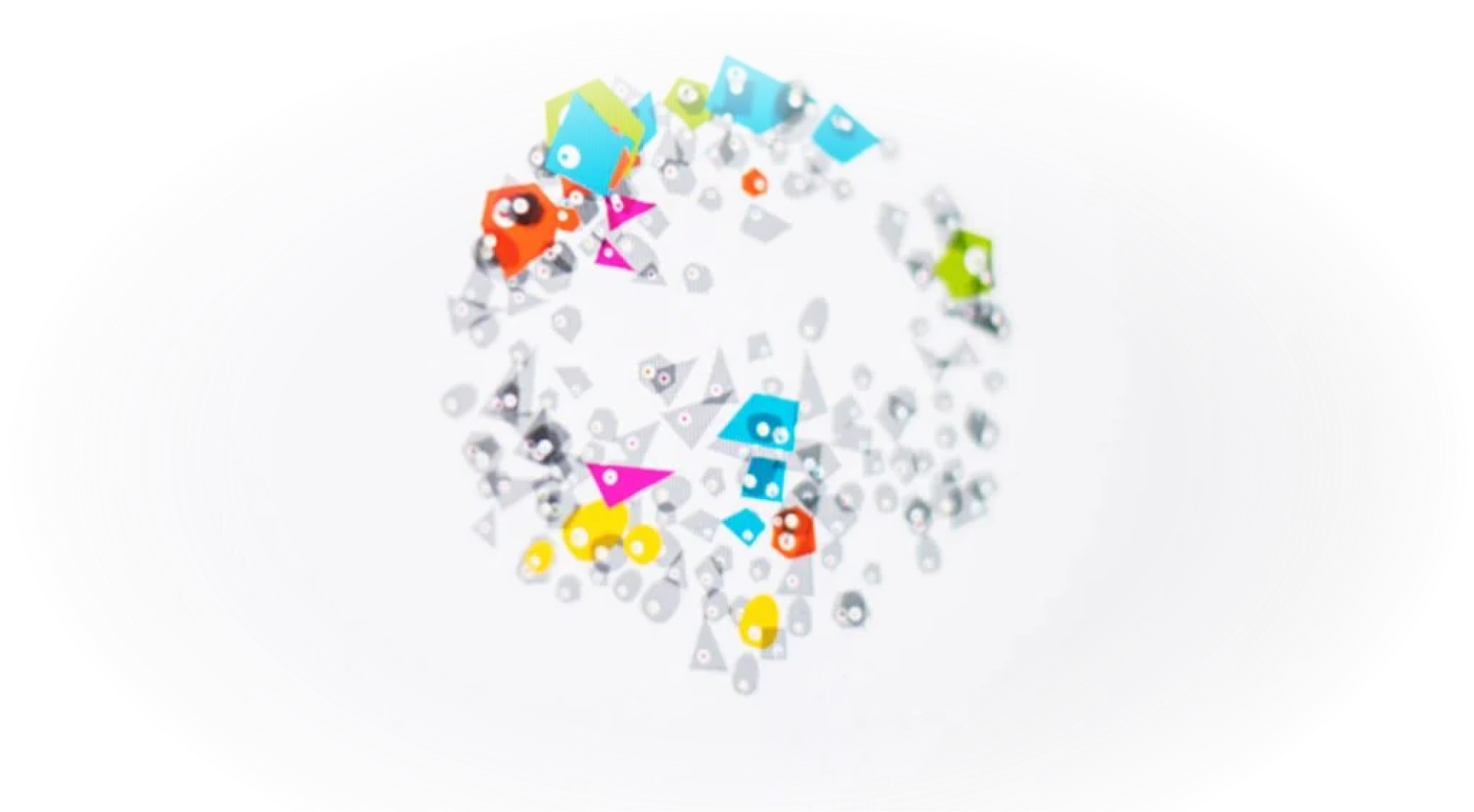
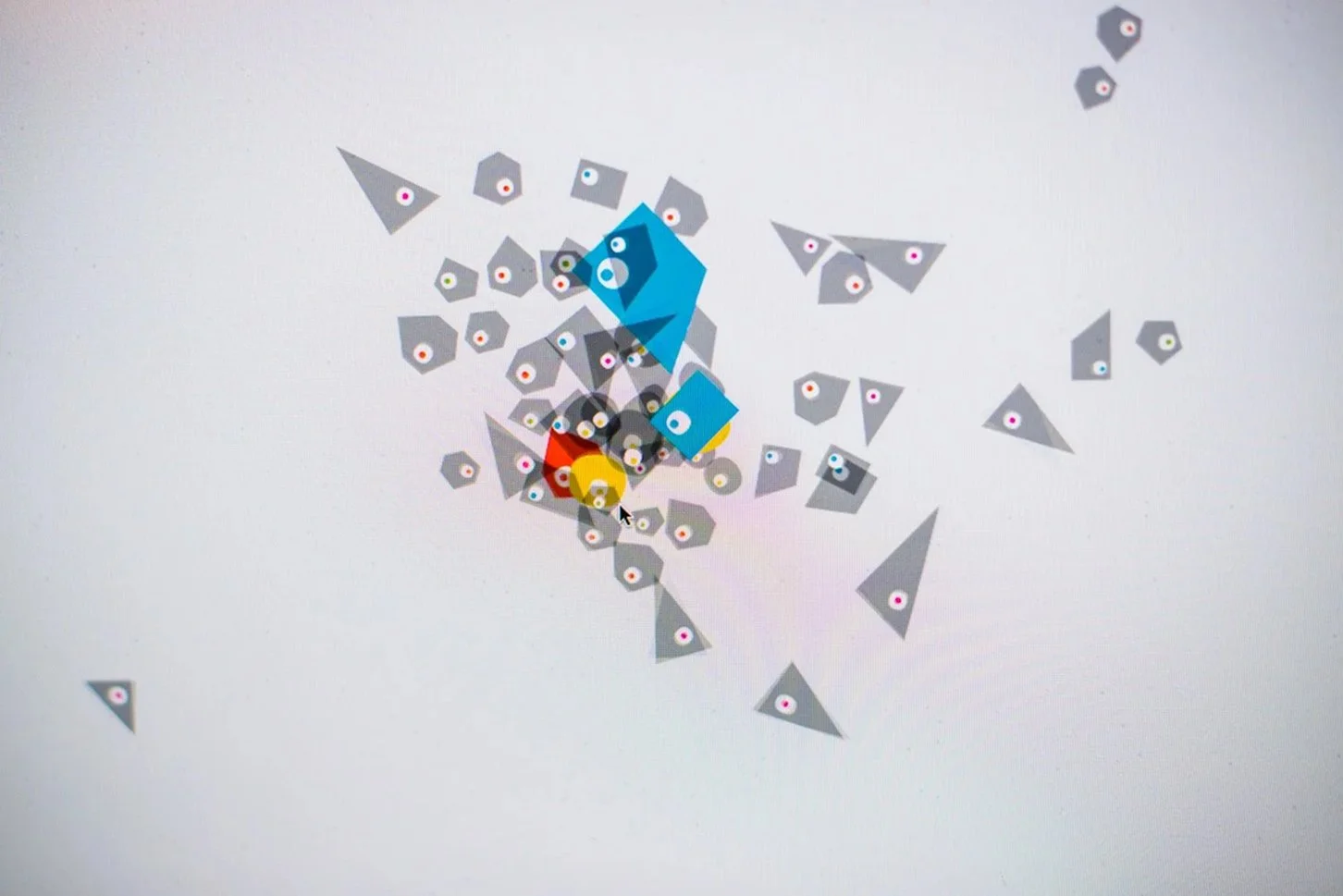
Habit characters as a flock of birds
Each time a child reflected on practising a habit, they'd customise and add a new bird to their personal flock. Individual flocks aggregated into a shared class flock, reinforcing collaboration over competition.
Progress as sound and rhythm
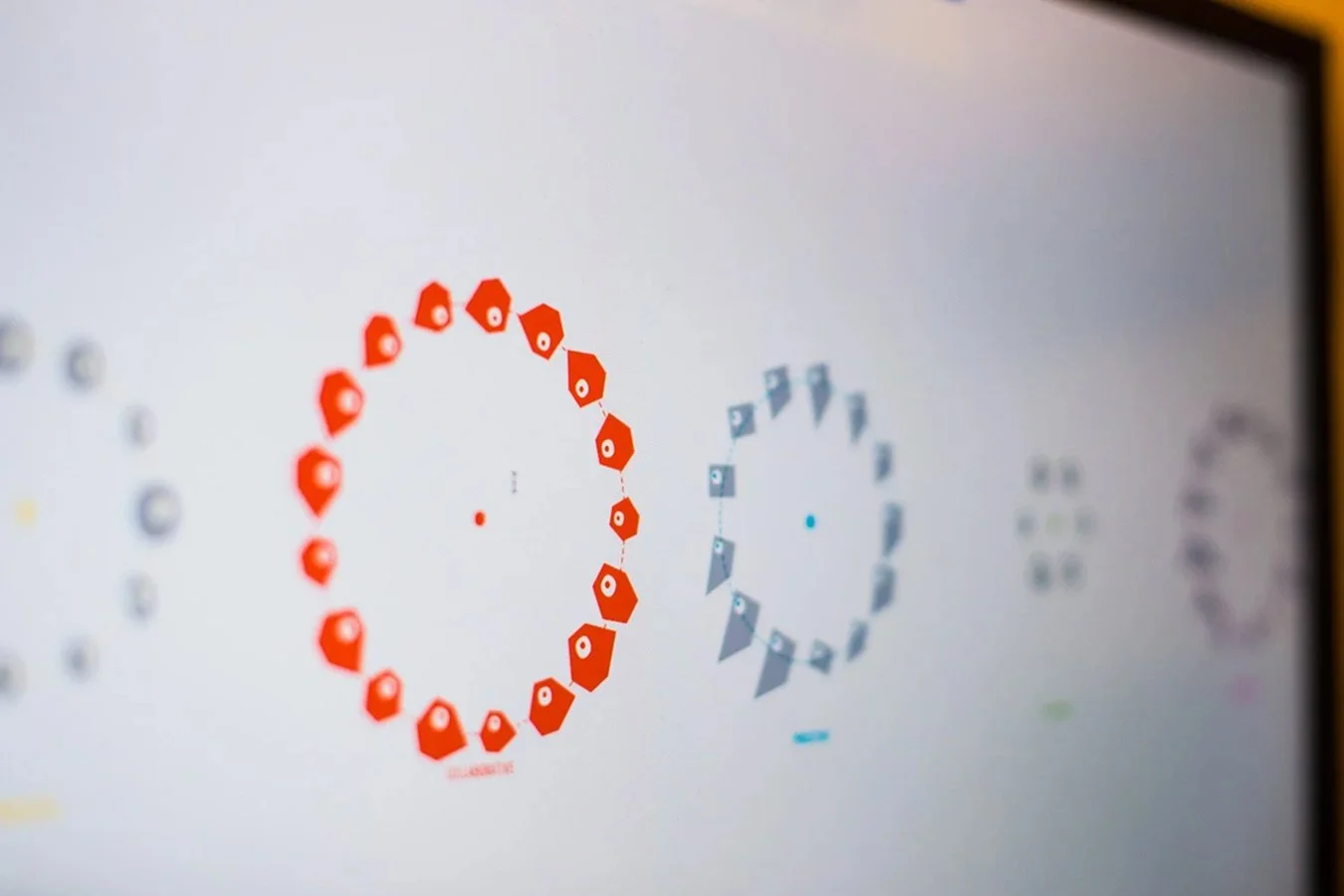
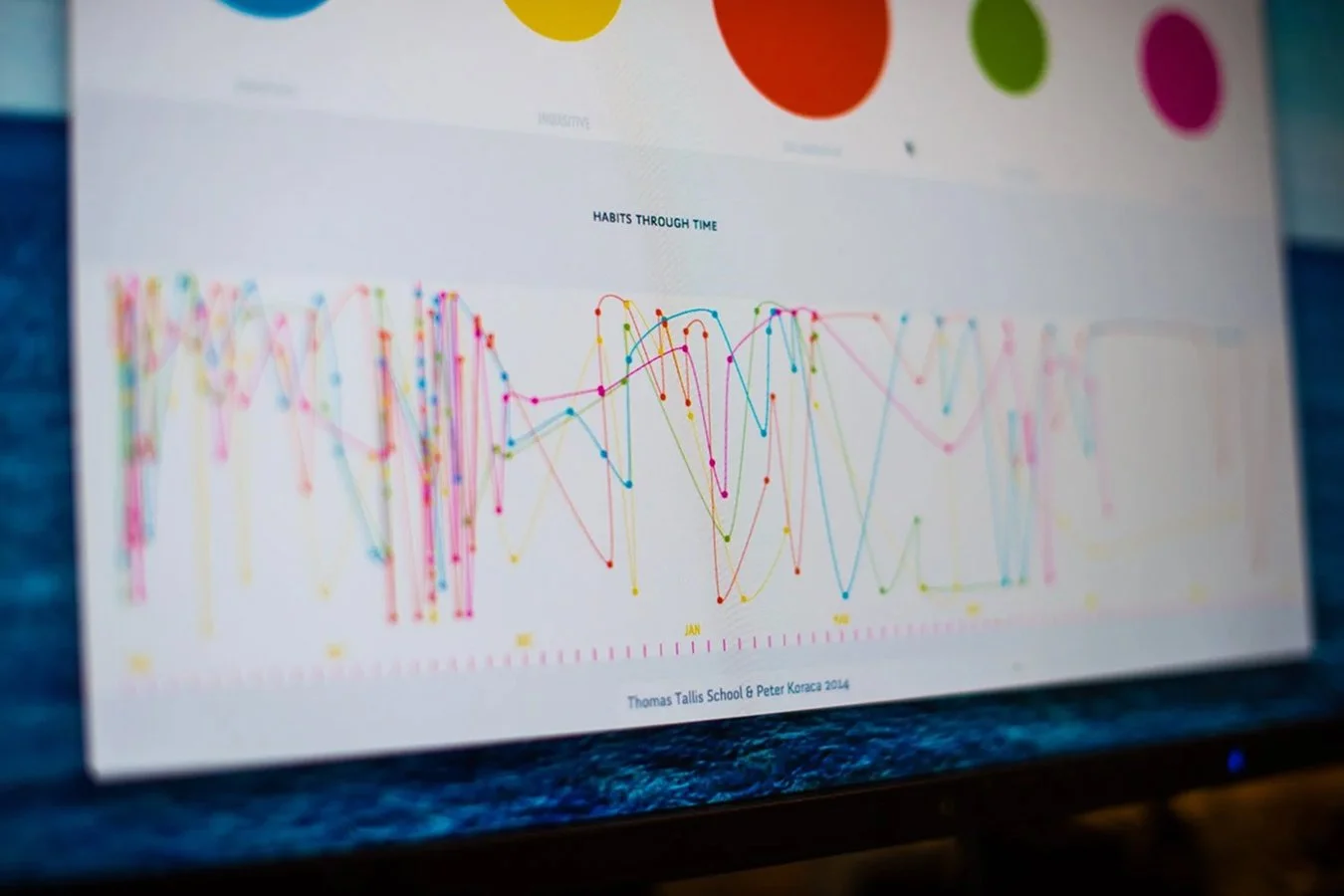
Several visualisations were built, in one each habit became a drum in a growing drum circle. As their flock grew, so did their sound. To explore history, a music-box interface let them scrub through time and replay their habit journey as a composition.
Daily check-ins through play
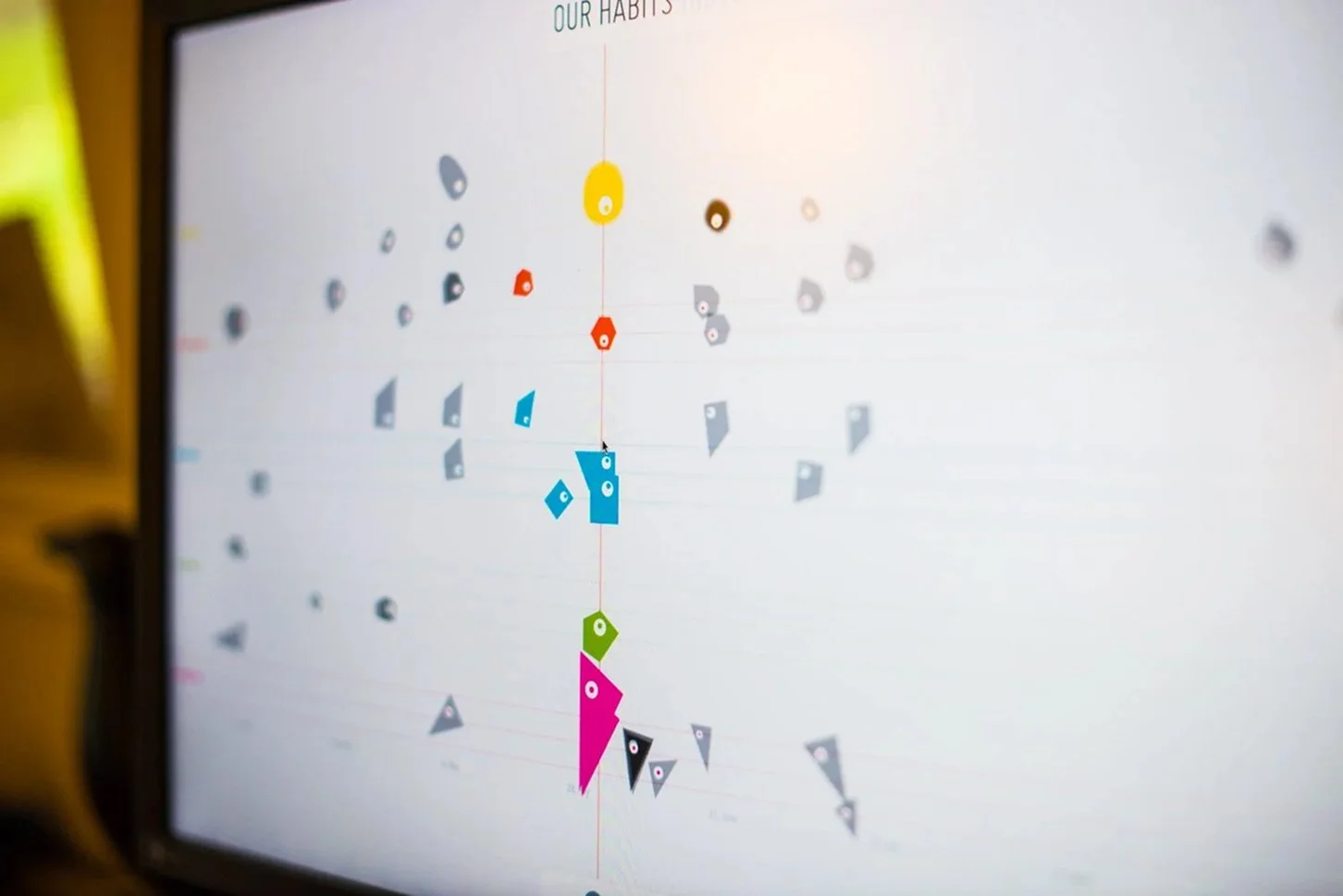
Instead of ticking boxes, children would pause and think by customising the character size/behaviour/movement (representing different aspects): "Was I curious today? Did I persist?" Then they'd welcome a new character into their flock.
Privacy by design
No names, no emails, no tracking. Each child logged in with a unique code. The system stored only habit reflections – nothing about who they were, where they were or how they used the app. Because this was for children, privacy wasn’t a feature – it was the starting assumption.
Outcomes
Shipped a habit app that children actually enjoyed using
Supported habit routines across the school over multiple years
Proved that “playful systems” can be more effective than “perfect tracking” in behaviour change
What I learned
If motivation is the product, delight is not optional.
A handful of excited kids/internal ambassadors/enthousiasts will sell your product better than any launch plan.
Behaviour design is about reducing friction and increasing agency – not adding more monitoring.
If you’re building a product where behaviour change matters – health, education, workplace habits – I would love to chat about how to design an experience that people actually stick with.