Reflections on Ultramarathons and Product Work
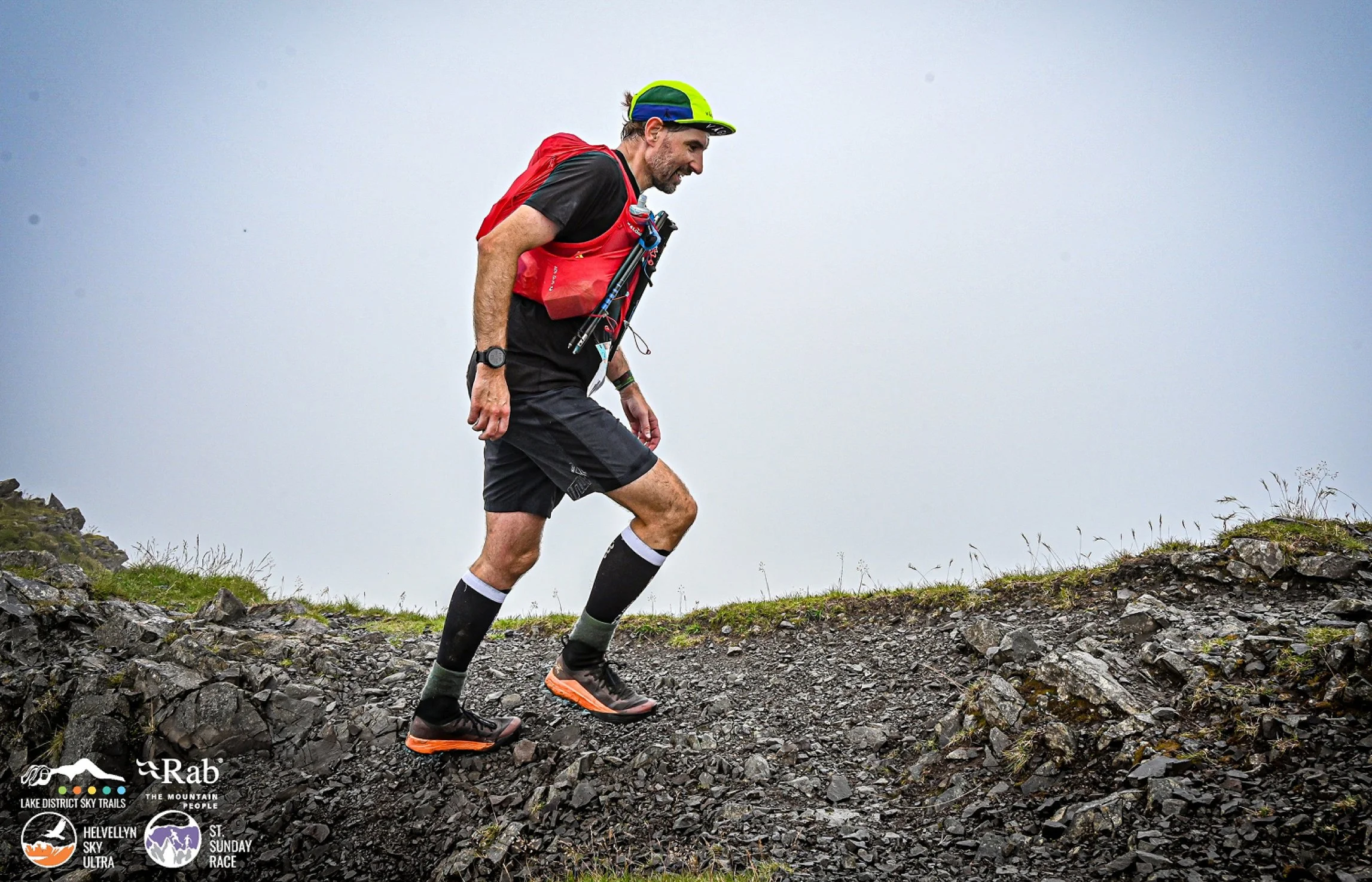
The other weekend, I got second place 🥈 in my category at Helvellyn Sky Ultra – a fairly technical 60 km ultramarathon in the Lake District (see video) with around 4,000 m of elevation. I’m nowhere near being a professional runner – or even a particularly fast one. But after 15 years of running ultras and building products, I’ve noticed that the best outcomes in both tend to share three principles: consistency, experimentation and informed intuition.
Recap of 15 years of running
I’ve gone through 3 phases in my running “career”:
- Phase 1 – getting into it, enjoying the process, loving being out on the trail, pushing speed and distance, hopping from rock to rock
- Phase 2 – getting serious about it, working with a coach, obsessing about metrics, planning race strategies, learning all I could about trail running (and injuries 🤦♂️)
- Phase 3 (current) – enjoying the process again, being out on trails, having fun with my whippet Neo
Best performances
The thing is, some of my best race performances have actually happened when the race plan went out of the window (100 miles of Istria 2024 – under 25 hours), when I wasn’t obsessing about the nutrition (Scafell Sky race 2026 – 2nd in cat) or when the weather was so bad I couldn’t have cared less about the pace (Dorset ultra plus 2018 – 8th overall).
What I learned about what works
Here’s what I’ve been doing in the months leading up to a race – and during it – that I believe has led to much better performance (and, more importantly, enjoyment).
- I stayed consistent in training
- I ran loads of small experiments beforehand
- I trusted my intuition and body over process and plans
I stayed consistent in training
When my training was consistent, I got better results.
I used to obsess over exact planned interval times, the number of runs per week or my weekly mileage. As a result, I would often get injured, get upset with myself or be too tired for those long runs. When I stopped caring about the exact metrics, I could show up five times per week, come rain, hail, gale, snow or even the occasional sun (I live in the Lake District). Some days I feel like only going for a flat 5K and that’s OK.
Consistency beats perfection. (Michael Hyatt)
I ran loads of small experiments beforehand
Ultras involve quite a few technical and strategic components beyond pure endurance and speed:
- Nutrition strategy – can your stomach handle 90 g of carbs every hour?
- Hill and power-hiking pace – can you push uphill? Hiking is often more efficient than running.
- Downhill technique – can you handle technical terrain at a fast pace … with tired legs?
- Gear – how long does it take you to grab the waterproof from the pack or fold the hiking poles away, and do you get a cramp doing it?
- Dealing with pain and niggles – how will you deal with a massive blister midway?
- Running at night with only a head torch – will you get freaked out or want to fall asleep?
- …and many more
I experiment with each of these in training. Some days I’ll intentionally have too many carbs to see when I’ll get sick; on others, too few. I’ll often go up the fell in gale-force winds to get used to the experience. I’ll run at night. I’ll practise getting the waterproof on and off.
Having experienced an actual situation before means that on a race/challenge day I don’t freak out. I know what to do because I’ve done it before. I don’t wait until I get to the top of the hill to put on a waterproof.
One of the best pieces of advice my coach gave me:
Be kind to your future self.
I trusted my intuition and body over process and plans
There have been many ultras where I obsessed about hitting the planned carbohydrate intake and checkpoint splits. And when I didn’t, my morale would drop or my stomach would start playing up.
In the last few years, I’ve started trusting my intuition more. My body has gone through many of these experiences now, and when it says to me on race day, “Actually, Peter, I’m happy with just a bit of water right now”, that’s what I give it.
This doesn’t mean I don’t have a plan going in; it just means I prioritise what my body and intuition are telling me over the plan.
No plan survives first contact with the enemy (Helmuth von Moltke).
How’s this relevant to building products?
When I reflect on the best work I’ve done and teams I’ve worked with that were truly innovative, I find the same three principles in play.
Consistency beats perfection
Teams that ship regularly create more opportunities to learn. Teams that pursue perfection often delay the very feedback that would improve their work.
This doesn’t mean lowering the bar or releasing carelessly. It means committing to a direction, putting something real in front of people and adjusting as new evidence arrives – strong opinions, loosely held, rather than design by committee.
Small experiments lead to big innovations
Training a versatile product muscle requires experimentation – trying out new techniques, experiencing different services and applying new processes. Building stuff that will never see the light of day. Sometimes a small experiment can grow into a completely new product; other times, it can make an existing one better. A new way of doing things can be just another tool in the box you pull out when needed. If you only have a hammer, every problem looks like a nail. And you can’t see a new opportunity arise even when it’s right in front of you.
Trust informed intuition over rigid plans
Innovation doesn’t happen spec-first. It happens with ideas that sometimes feel crazy. The iPhone, Figma, ChatGPT, Facebook, Strava and Cursor all came about as a result of a kernel of an idea – an intuition that was worked on and allowed to grow (believed in and nourished) through a thousand experiments. Many were discarded, but a few really worked.
In ultramarathons, your watch might tell you how fast you are, but it won’t tell you how you’re feeling about it and how much “spirit” you have left. Speed doesn’t matter without direction.
Closing thoughts
All happy families are alike; each unhappy family is unhappy in its own way. (Leo Tolstoy, Anna Karenina)
The same principle applies to ultramarathons and products: many things need to work together for the outcome to be exceptional, while any one of them can derail it.
You can’t control every condition. But you can improve your odds: show up consistently; trust your intuition, but test your assumptions; and treat the plan as guidance rather than gospel.
And as in ultras, so in product building:
Pain is inevitable. Suffering is optional.